

For most first-time visitors, the best place to stay in Corralejo is around the town beaches and central Avenida Nuestra Señora del Carmen. It is the most flexible base: you can walk to restaurants, supermarkets and the sea, head to the harbour for Lobos Island boats, and visit the famous dunes without committing to a remote resort hotel. If evening restaurants and ferries matter most, choose the old town. If long stretches of pale sand matter more than nightlife, look toward Grandes Playas instead.
Corralejo is not one compact beachfront hotel zone. The harbour, old town, town beaches, El Campanario, the Bristol coast and the hotels near Corralejo Natural Park offer quite different holidays. This guide focuses on where to book your accommodation: which part of Corralejo suits families, couples, friends and car-free visitors; what you gain and lose by staying near the dunes; and which real hotels help illustrate the different locations.
Our key booking rule: check your hotel's actual walking route to both your preferred beach and the restaurants you expect to use. A property may be marketed as “Corralejo” while being well outside the useful pedestrian centre. Fuerteventura's wind, heat and distances make that difference noticeable.
Best areas to stay in Corralejo at a glance
| Area | Who it suits best | Main advantage | Watch out for |
|---|---|---|---|
| Old town and harbour | Couples, independent travellers, ferry trips, restaurants | Walkable evening atmosphere and port departures | Noise on restaurant streets; smaller town beaches |
| Central Corralejo / main avenue | First-timers, couples, friends, apartment stays | Everyday services, transport, dining and shops | Busy road-facing rooms; not every address is beachfront |
| Corralejo Viejo / La Goleta town beaches | Families, beach-and-town holidays, no-car stays | Easy beach visits without a day trip | Smaller, busier beaches than Grandes Playas |
| El Campanario / southern town | Couples, families wanting pools and a quieter base | Useful middle ground between town and road out to the dunes | Some complexes are farther from harbour restaurants |
| Grandes Playas / dunes hotels | Beach-first travellers, resort-hotel holidays | Direct access to spectacular dune-backed coastline | Less choice of restaurants within walking distance; exposed beaches |
| Bristol and outer residential streets | Long stays, independent travellers, people prioritising quiet | Residential feel and some sea views | Rockier, more exposed coast; location-dependent walking distances |
| Villas / Tamaragua / La Capellanía | Groups, families with a rental car, private pools | Space, parking and privacy | Not a walkable harbour-and-beach holiday |
Fast recommendation: choose the centre or town beaches unless you have a clear reason not to. They leave the most options open. The old town is the best fit if Corralejo's restaurants and port are your main priorities; the dune-side hotels are a different, more hotel-led holiday.
How Corralejo is laid out — and why the map can be misleading
Corralejo occupies the northern end of Fuerteventura, facing Isla de Lobos and Lanzarote. The old harbour and compact restaurant streets sit toward the northern waterfront. Avenida Nuestra Señora del Carmen forms a main commercial route through the town. Small, convenient beaches lie along the built-up coast, while the wide, pale beaches of Corralejo Natural Park begin outside the denser town area to the south-east.
This geography matters more than broad hotel-category labels. A seafront apartment near the harbour might suit a couple going to restaurants every night but disappoint someone expecting a huge stretch of sand. A hotel near the protected dunes can deliver the picture-postcard beach, yet require transport for spontaneous evenings in town. An inland villa may have a large pool and still be impractical for visitors who do not intend to drive.
If you are comparing two properties, open a walking map and test three journeys: to the beach you want to swim at, to a supermarket or restaurant, and to the harbour or main bus stop. In Corralejo, those three destinations often tell you more about the holiday than the hotel's star rating.
1. Old town and harbour: best for restaurants, atmosphere and boat trips
The old-town waterfront is Corralejo's most distinctive place to stay if you want to spend your evenings outside the hotel. Rather than a self-contained resort complex, you get harbour activity, fishing-boat views, small streets, restaurants and ferry departures. It has a recognisable town character beneath the tourism infrastructure, so it suits visitors who prefer wandering between independent restaurants to spending every night at a buffet.
Choose this area if: you are a couple who values dinner choice, a traveller planning several boat trips, or someone taking an early ferry to Lobos Island or Lanzarote. Staying near the departure point is useful because you can avoid arranging a taxi every time you need to be at the port.
The trade-offs: you are not automatically beside Corralejo's best swimming beach or the large dune-backed coast. Some rooms face restaurants or late-evening activity, and older buildings may lack lifts. Check recent reviews for the exact building, not just the old-town neighbourhood. A room above a lively terrace can have a completely different atmosphere from one in a quiet side street.
Real accommodation example: AVANTI Lifestyle Hotel illustrates the smaller, characterful seafront-hotel option in this part of Corralejo. Its operator describes a compact historic property, rather than a sprawling all-inclusive complex. This is an example of the location and hotel style to compare, not a personal inspection or an assurance that it is right for every budget.
If the main question is harbour versus dunes, our separate Corralejo old town vs dunes-road hotels comparison examines that narrower decision.
2. Central Corralejo: best all-round base for a first visit
For most visitors who have not stayed in Corralejo before, the useful central streets around Avenida Nuestra Señora del Carmen are a sensible first search area. The advantage is flexibility. You can eat in different places, compare apartments and hotels, reach everyday services, book a day trip or hire a car locally for just one or two days. Most holiday activities are not dependent on remaining at the hotel.
Central Corralejo is especially attractive if you want breakfast-only or self-catering accommodation. You are more likely to use the kitchens, supermarkets and local restaurants you are paying to have nearby, rather than depending on taxis to eat out. The centre is also well suited to people who want a swimming-pool day followed by a walk around town.
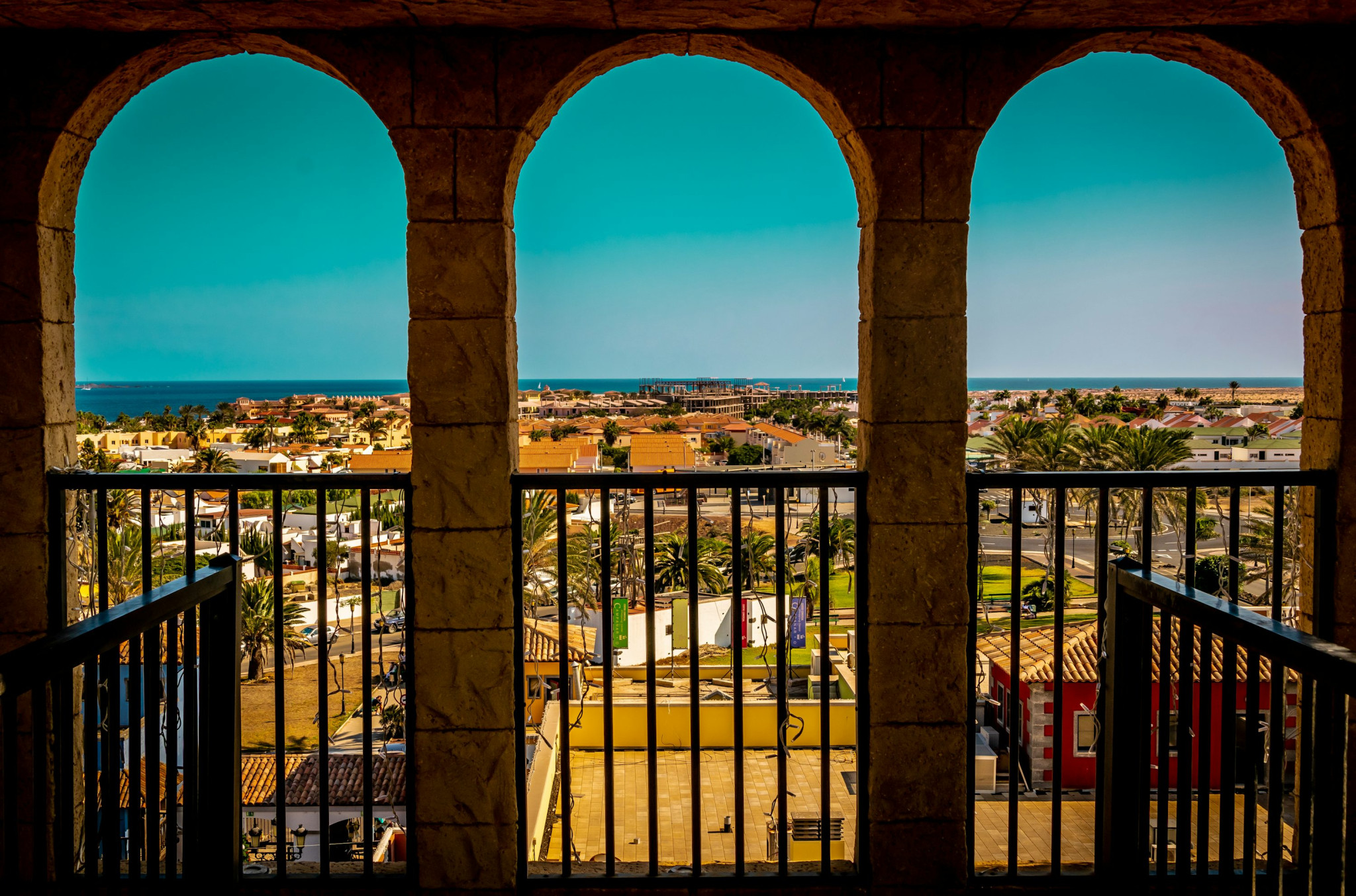
Where to be careful: “central” is not the same as “quiet”. Rooms facing bars, traffic or late restaurant areas may be noisy, and some inland accommodation advertised as central still requires a longer walk to the actual sandy beach. When comparing similar prices, prioritise the pedestrian route to the waterfront and recent maintenance reviews over a small difference in floor area.
Examples to locate on the map: H10 Ocean Dunas is an adults-focused central hotel that its operator places close to the beach. Barceló Corralejo Bay is another adults-only option in the main resort, with the operator stating it is approximately 300 metres from the beach. Neither should be assumed to be a family hotel simply because the address is convenient.
3. Town beaches: best for families and car-free beach days
The best-known photographs of Corralejo show immense pale-sand beaches beside dunes, but families staying in town often find the smaller urban beaches more convenient in daily life. Around Corralejo Viejo, La Goleta and neighbouring town coves, you can have a swim or sit on the sand and still be close to cafés, shops and your apartment.
This matters with younger children. If someone needs a nap, forgotten sunscreen, lunch or a change of clothes, a practical town-beach apartment can make the day much easier than a hotel several kilometres from the centre. Town beaches are also useful for couples on short breaks who want the sea nearby without planning a whole excursion every time they swim.
The official Fuerteventura tourism service describes Corralejo Viejo as an accessible beach with ramps, walkways, toilets and showers close to cafés and shops. It is a good example of why a compact beach can be a smarter family booking choice than a much larger but more exposed one. Swimming suitability still depends on current wind, tide and beach flags; do not assume any Atlantic beach is guaranteed safe in all conditions.
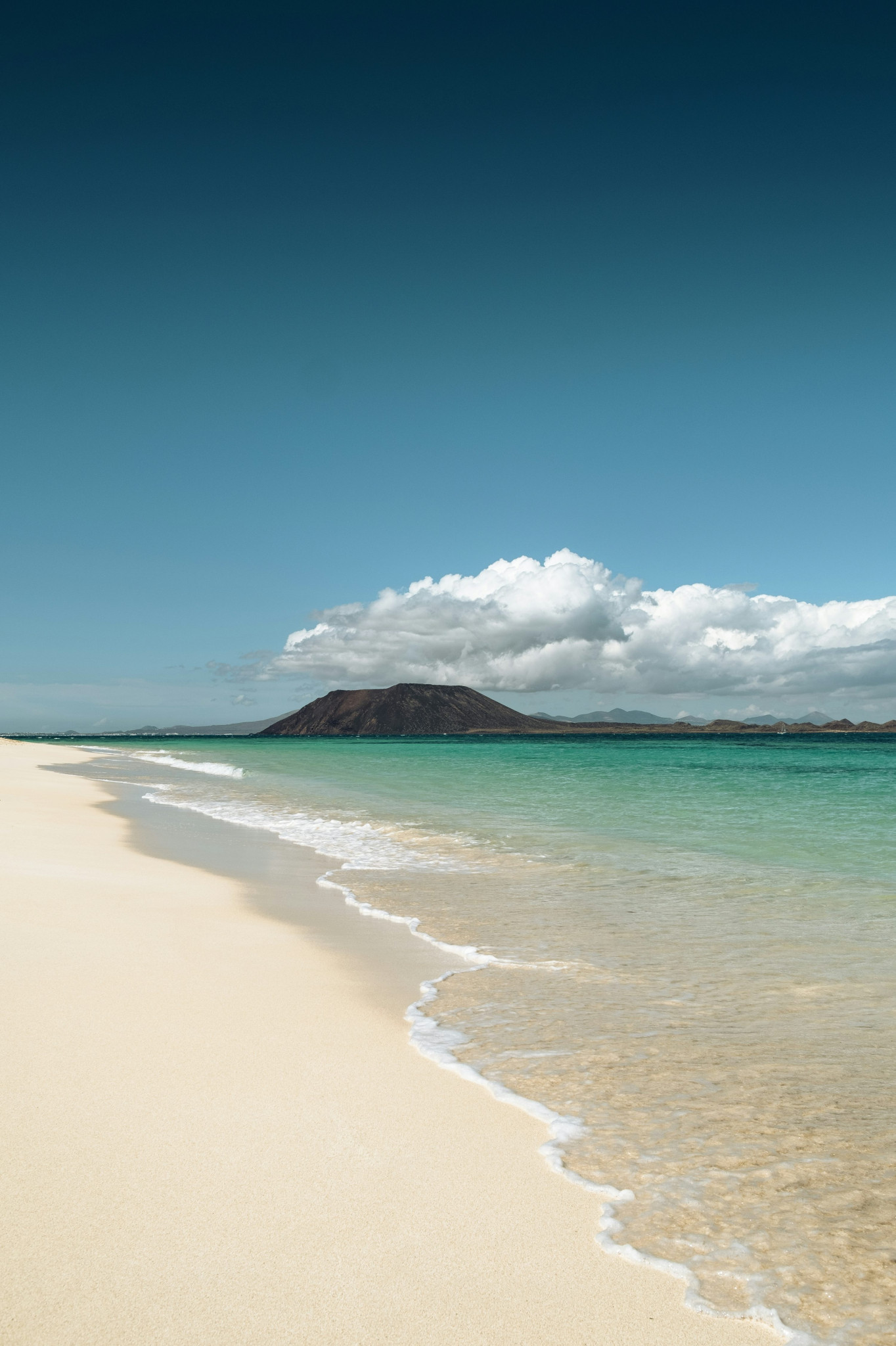
The limitation: the town beaches are not interchangeable with Grandes Playas. They are smaller and can feel busy, particularly in high-demand weeks. If vast horizons and dune scenery are the whole point of your trip, book accommodation to match that wish or schedule several visits to the natural park.
4. El Campanario and the southern part of town: a useful compromise
Some visitors want the convenience of Corralejo but would rather not stay directly in the busiest harbour streets. The accommodation streets around El Campanario and the southern town area can work well for this. You are still in an established part of Corralejo with shops and services, but the atmosphere changes by block from commercial streets to quieter apartment and hotel complexes.
This can be a good choice for families who value an aparthotel pool, couples who prefer quieter evenings, or travellers who will mix town restaurants with a few taxi or car trips to Grandes Playas. It also puts you on the side of town that leads toward the dunes — although being closer to that road does not necessarily put the famous beaches at your front door.
For a no-car booking, compare the walking distance to a specific town beach and the return route from dinner. If you expect to use the harbour most mornings for boats, a more northern location may be preferable. If your priority is the hotel's pool and comfortable access to shops, this middle area could be a better fit than the oldest waterfront streets.
5. Grandes Playas and the dunes hotels: best for a scenic resort stay
The dramatic photographs that sell Fuerteventura are real: pale sand, long open beaches, turquoise Atlantic water and the sweep of Corralejo Natural Park. The official tourism website describes the Grandes Playas coast as a series of beaches stretching for approximately nine kilometres, backed by the Canary Islands' largest dune field. This is not simply a longer version of a town beach — it has a completely different sense of space.
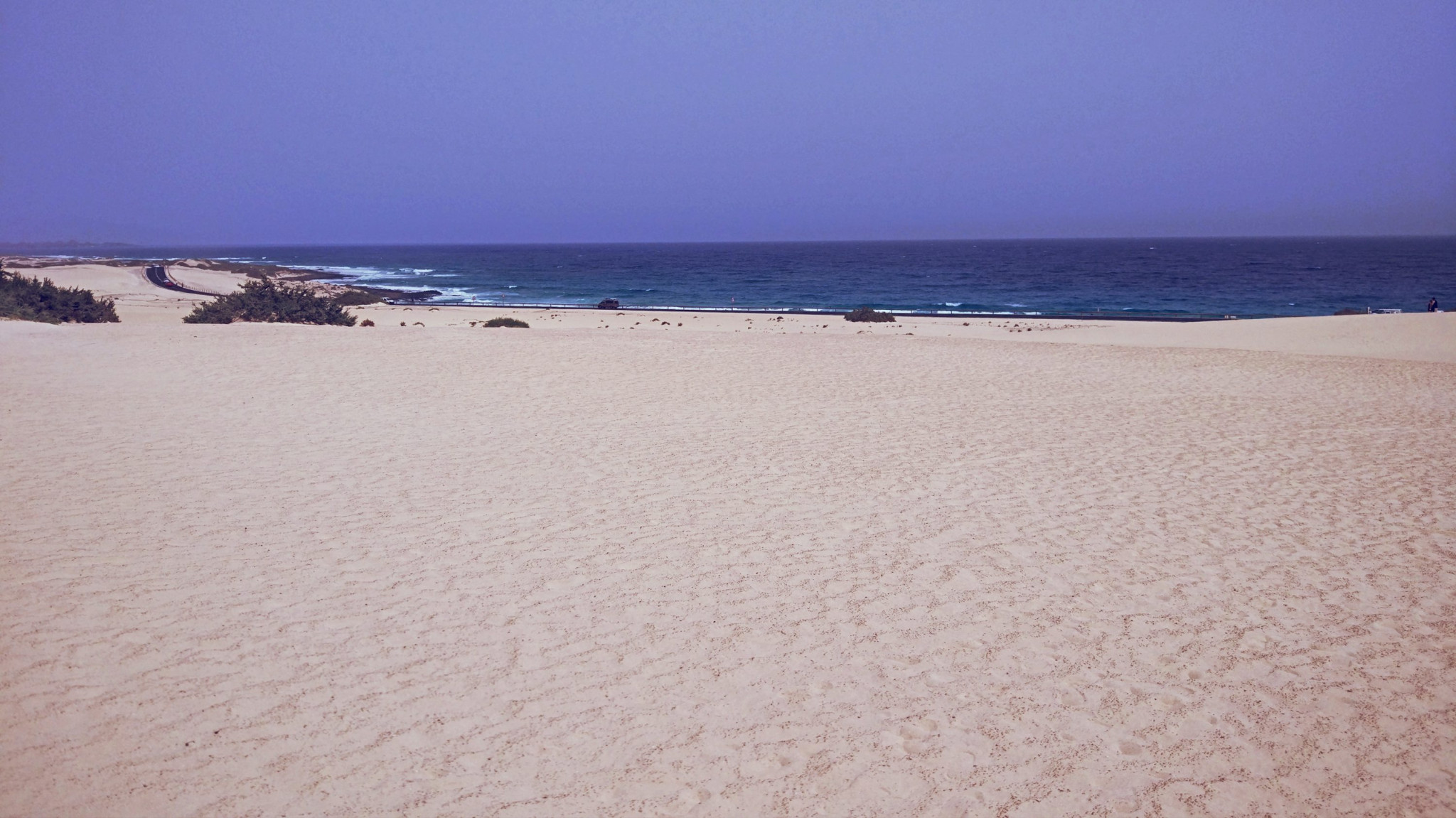
Choose this area if: you want a hotel-led holiday with the beach and pool as the main programme, or you are happy returning to the same property for some meals. It is appealing for couples who want walks beside the dunes, travellers prioritising scenery and visitors who do not need Corralejo's restaurant streets outside the door every night.
Real hotel example: Riu Palace Tres Islas is positioned directly by the Grandes Playas coast and offers a full resort-hotel style of stay. It is a helpful example of the geographical trade-off: immediate beach scenery rather than the compact harbour-and-restaurant environment.
Be careful with blanket descriptions such as “the dunes are perfect for families”. The coastline includes different beaches and uses. Official tourism guidance identifies serviced locations such as Bajo Negro as well as more exposed water-sports stretches and quieter sections. Lifeguard provision and swimming conditions vary, and this is a protected landscape. Follow designated access routes, leave natural material in place and do not treat the dunes as a place for off-road driving.
The biggest downside is evening logistics. A dune-side hotel does not automatically put you within an easy after-dinner walk of central Corralejo. Consider on-site restaurants, whether a bus serves your actual hotel stop and how frequently you would take taxis into town. The total cost and convenience can make a slightly more expensive central hotel better value for visitors who go out every evening.
6. Bristol: for an independent coastal base, not a classic sandy-beach resort
Bristol appears frequently in Corralejo apartment searches because of its residential accommodation, seafront outlook and position near the northern side of town. It can be an attractive base for people who like a quieter setting and are happy to walk into the central streets for meals. Some properties may appeal to longer-stay travellers who do not need a large resort hotel.
The important distinction is the coastline. The Bristol side is more exposed and rockier than Corralejo Viejo or the broad dune beaches. You should not book a Bristol apartment assuming that any nearby patch of seafront is automatically a sheltered swimming beach. Look at photographs of the actual water access and consider where you will swim on an ordinary day.
The north-facing and exposed nature of parts of this coast can be part of the attraction for sea views and coastal walks, but may be a poor choice for families who want to run directly onto soft sand every morning. Check the walking route to the harbour and town beaches, plus any nearby construction or nightlife mentioned in current reviews.
7. Villas, Tamaragua and La Capellanía: space for travellers with a car
Corralejo has villa and residential developments beyond the easiest walking radius, including the inland Tamaragua / La Capellanía area. These are worth considering for groups and families who value several bedrooms, a kitchen, a private pool or parking more than a central holiday-town atmosphere.
Real villa example: Bahiazul Resort Fuerteventura offers villas with private pools and roof terraces, according to its official property information. Its location on Calle Pardelas is a useful reminder that a Corralejo address does not mean you are staying beside the old-town harbour. Check the precise accommodation and road journey before booking, especially if you intend to dine out regularly.
A villa can make excellent financial sense for a group splitting accommodation and rental-car costs. But it is often the wrong choice for a couple who will not drive and wants to wander out every evening. Taxis to and from town quickly become part of the holiday routine. Also check pool-heating arrangements, security deposits, stair access and whether the car will fit in the available parking.
Real hotel examples: use them to understand locations, not as a ranking
The following examples illustrate different accommodation types and locations. They are not a ranking based on personal stays, and no live room rates or availability are claimed. Hotel services and age policies should be checked for your dates.
| Property | Type and location | Useful for comparing |
|---|---|---|
| AVANTI Lifestyle Hotel | Small seafront property in historic Corralejo | Old-town character and a restaurant-led holiday |
| H10 Ocean Dunas | Adults-focused hotel in central Corralejo, near the beach | Walkable location with hotel facilities |
| Barceló Corralejo Bay | Adults-only resort hotel near the central beach zone | Pool-and-spa comfort without leaving the town |
| Riu Palace Tres Islas | Full-service hotel at Grandes Playas | Beachfront resort stay outside the old-town restaurant core |
| Bahiazul Resort Fuerteventura | Private-pool villas in an inland Corralejo setting | Privacy and space when you can manage transport |
A good comparison starts with the type of holiday and then checks the actual property. Use cancellation conditions, total booking price, recent guest feedback, meal plan, room position and the walk or drive to where you want to spend your days. For more accommodation detail aimed at adult travellers, see our adults-only hotel comparison.
Which part of Corralejo is best for your trip?
| Traveller | Start looking here | Why |
|---|---|---|
| First-time couple | Town beaches or central Corralejo | Good balance of dining, beach, harbour and transport |
| Couple focused on food and evenings | Old town / harbour | Most convenient for restaurant hopping and boat departures |
| Family with younger children | Corralejo Viejo / La Goleta | Shorter distances from sand to apartments and food |
| Family wanting a full-service hotel | Town aparthotels or selected dune-side resorts | Pools and on-site facilities; compare beach safety and transport |
| Solo traveller without a car | Central Corralejo | Walkable services, restaurants and excursion meeting points |
| Beach-first traveller | Grandes Playas hotel zone | Natural-park scenery and large beaches |
| Friends seeking nightlife | Central restaurant and bar streets | Easy evenings without arranging taxis |
| Group hiring a car | Villas / inland outer areas | Bedroom space, privacy and parking |
Corralejo is lively by Fuerteventura standards, but it is not the same type of nightlife resort as Playa de las Américas in Tenerife or Playa del Inglés in Gran Canaria. If the holiday is centred on large nightclubs rather than restaurants and casual bars, check local expectations before booking.
Can you stay in Corralejo without a car?
Yes — and the location decision is more important than the absence of a rental car. Stay near the town beaches, old town or central streets and you can manage many holiday days on foot. You can reach restaurants, supermarkets, excursion departures and smaller beaches without paying for a vehicle that spends most of the week parked.
For transport farther afield, the TIADHE bus network provides line 6 between Puerto del Rosario and Corralejo and line 8 between Corralejo and El Cotillo. Service patterns and stop variants matter, so check which bus actually serves the harbour or your hotel. Some routes also pass stops in the dune-hotel corridor, but do not assume every departure stops where you need it.
One of the most attractive car-free plans is to use Corralejo for its town beaches and restaurants, take a ferry to Lobos Island, visit the dunes by local transport or taxi, and make El Cotillo a planned day trip. You do not need a car for all of that. You do need one — or a guided tour — if your itinerary requires several remote viewpoints and inland villages in one day.
If avoiding driving is a core requirement rather than a preference, our Corralejo without a car guide compares the best walking areas and bus-day-trip trade-offs in more depth. For the broader island, see where to stay in Fuerteventura without a car.
Getting from Fuerteventura Airport to Corralejo
Corralejo is in the north, while Fuerteventura Airport (FUE) lies near Puerto del Rosario. There is no need to reserve a rental car for the entire holiday purely to solve this first journey.
Public bus: the standard plan is to reach Puerto del Rosario on an airport-serving service, then change to TIADHE line 6 for Corralejo. Aena identifies line 3 as the principal route connecting the airport, Puerto del Rosario and Caleta de Fuste. Some line 6 journeys have variants, so always verify the precise boarding stop and day-specific timetable rather than assuming a direct airport service or a guaranteed quick connection.
Taxi or private transfer: a practical choice after an evening arrival, with young children, several suitcases or an address outside town. Aena advises using the signed official taxi rank at the airport, rather than accepting unsolicited rides elsewhere. For a group, compare the total vehicle price with the combined bus tickets and any necessary final taxi.
Car hire: worthwhile if you intend to drive regularly to El Cotillo, Lajares, La Oliva, Betancuria or the island interior. If you are staying centrally and will explore for only one or two days, a short rental after arrival can be better value than collecting a car for the whole week.
For a transfer-specific breakdown, read Fuerteventura Airport to Corralejo: bus, taxi and transfer. Always verify the live route information and hotel pickup point before travelling.
Why the harbour matters: Lobos Island and Lanzarote ferries
Corralejo is one of the best bases on Fuerteventura for sea excursions because the harbour serves trips to the nearby Isla de Lobos and ferry crossings toward Playa Blanca on Lanzarote. If you plan multiple boat departures, a hotel near the old town can save early-morning transport and reduce the chance of arriving late at the quay.
The trip to Lobos is short, but access to the protected islet is controlled. Official Fuerteventura tourism advice explains that visitor authorisation is required and should be arranged in advance. Some ferry or tour operators may help organise it; check the booking details rather than assuming a return boat ticket automatically includes everything. Bring water and sun protection, and stay on authorised paths to protect the natural park.
To compare ferry-only, catamaran and snorkelling options, use our Corralejo to Lobos Island boat trips guide. That topic deserves its own detailed discussion, including what the operator actually includes and how to plan the return crossing.
The Lanzarote ferry offers another option: a day in Playa Blanca or a two-island stay. A full Lanzarote sightseeing itinerary takes more planning than a simple return ferry trip. If you want to visit several sites beyond Playa Blanca, check the onward transport and return sailing before deciding whether a single day is realistic.
What to book in Corralejo for a three-night, seven-night or longer stay
Three or four nights: stay central
For a short trip, minimise friction. Choose the town-beach or central area and enjoy nearby cafés, swimming, one harbour excursion and a dunes visit. You will spend less of the holiday organising local transport. Dune-side hotel stays can also work for a short break, but only if your main ambition is a beach-and-pool retreat rather than exploring the restaurant scene.
Seven nights: town convenience plus two day trips
A week gives you room to combine both versions of Corralejo. Stay centrally; schedule easy town-beach days; plan a Lobos boat trip; spend a separate day at Grandes Playas; visit El Cotillo by bus or car; and use a guided tour or short rental for inland Fuerteventura. Keep one flexible day in case wind or sea conditions affect a boat booking.
Two weeks or more: decide whether a quieter apartment or villa pays off
On a longer stay, a larger apartment, a better kitchen or a quiet residential location may matter more than being a few minutes from every restaurant. But calculate how often you will actually use the car and where you expect to shop. A lower nightly rate is not automatically better value if every day starts with a drive to the beach.
Eight checks before booking a Corralejo hotel or apartment
- Which beach? Confirm whether “beachfront” means a town sandy beach, an exposed rocky waterfront, or Grandes Playas.
- Real walking route. Check the pedestrian route to dinner, supermarket and any boat departure — especially from Bristol and outer villas.
- Noise. Recent reviews matter near harbour bars and main avenues. A quieter room may be worth more than a better sea view.
- Wind and sea conditions. Fuerteventura is windy; no beach is consistently sheltered every day, so prioritise flexibility for family swimming.
- Apartment practicalities. Confirm kitchen equipment, lifts, laundry options and whether the balcony faces a busy street.
- Hotel facilities. Check actual pool heating, children's facilities, meal plan and age policy for the dates you are booking.
- Parking and driving. Do not assume central street parking will be effortless. For villas, ask where the vehicle can be left.
- Transfers and tours. Know where the airport shuttle or excursion van will collect you; “Corralejo pickup” may mean a meeting point rather than your front door.
Frequently asked questions about where to stay in Corralejo
What is the best part of Corralejo for a first holiday?
Central Corralejo and the nearby town beaches are the most flexible starting point. Restaurants, shops, beaches and the harbour are all within the town environment, so you are not tied to a hotel-only routine.
Is it better to stay in Corralejo town or by the dunes?
Choose town if you want restaurants, excursions and everyday walking convenience. Choose the Grandes Playas hotel area if your holiday is mainly about large beaches, the dunes and hotel facilities. Neither is universally better; they suit different travel styles.
Which Corralejo area is best for families with children?
Corralejo Viejo and the central town beaches are practical because services and accommodation are close to the sand. Some family-friendly resort hotels near the dunes also work well, but swimming conditions and travel back to town need checking.
Can you walk from Corralejo to the famous dunes?
You can walk toward the natural-park area from parts of the resort, but do not confuse “walking to the edge of the park” with comfortably reaching a specific Grandes Playas beach with bags and children. Local transport, a taxi or a properly positioned hotel may be easier.
Is Bristol a good area to stay?
It can be for quiet apartment stays and coastal views, provided you check the exact address. Its exposed and rocky sections should not be confused with the serviced sandy beaches most families want for everyday swimming.
Do I need a car in Corralejo?
No, not when staying centrally and planning a resort, beach and boat-trip holiday. A rental is more useful for outer villas, remote beaches and independent exploration of northern and central Fuerteventura.
Where should I stay for the ferry to Lobos Island?
Near the old town and harbour, particularly if you want to walk to the departure point. Confirm both the ferry booking and the required Lobos visitor authorisation.
Is Corralejo or El Cotillo a better base?
Corralejo is generally easier for restaurant choice, transport and boat trips. El Cotillo suits a quieter village-and-beach holiday with a slower pace. Compare the two in our Corralejo vs El Cotillo accommodation guide.
Final recommendation: where should you actually book?
Book the town beaches or central Corralejo if you are unsure. It is the lowest-friction choice for a first trip, particularly without a car. Choose the old town and harbour if restaurants and ferries are central to your plans. Choose Grandes Playas if your idea of the perfect holiday is big scenery, sand and the pool. Choose Bristol or villa developments when quiet, space and independent transport are more important than everyday beach access.
Once the area is right, compare like-for-like accommodation rather than relying on star ratings alone. Review real room conditions, total cost, cancellation policy, age restrictions and current walking routes. You can start with Fuerteventura hotels and accommodation or compare the island's other bases in our Fuerteventura resort guide.
Editorial review — October 2026. Local geography, beach services and nature-park context were checked against the official Fuerteventura tourism website. Airport bus coverage was checked against Aena and TIADHE; the sample hotels were checked against their operators' published descriptions. This guide does not claim first-hand inspection of individual rooms or guaranteed current hotel availability. Photographs: Tom Podmore, Marcreation and Alejandro Martin (Unsplash, used under the Unsplash License).