

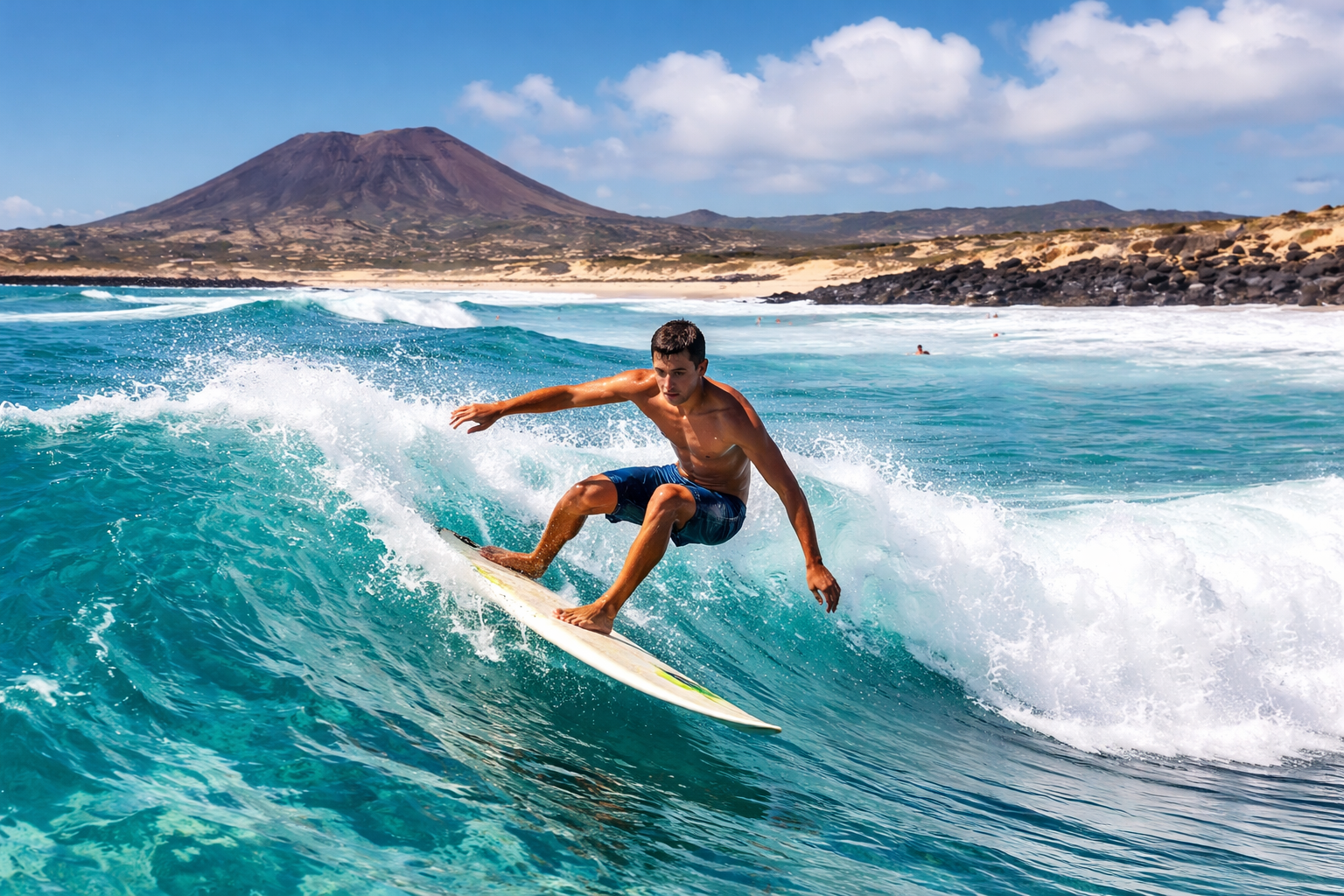
If you are trying to decide which Canary Island is best for surfing, the first thing to understand is that there is no single answer for everyone. The Canary Islands are one of the best year-round surf regions in Europe, but each island has a very different surf personality. Some are better for beginners and improvers who want beach breaks, surf schools and easy accommodation. Others suit surfers who care more about stronger identity, better-known surf culture and a trip that feels shaped around the ocean from the first day. Some work best if surfing is the whole reason for travel. Others are stronger if only one person in the couple or group actually surfs.
That is why choosing the right island matters commercially as much as it matters in the water. A successful surf holiday is not only about the wave itself. It is about airport access, where you stay, whether you want a surf camp or a hotel, whether the trip should also include nightlife, beach time, restaurants and sightseeing, and how much flexibility you want if conditions change. The “best surf island” for a first lesson is not necessarily the same island you would choose for a more surf-defined week or a return winter trip.
The islands most often compared for surf travel are Fuerteventura, Lanzarote and Tenerife. Gran Canaria can also work very well when surf is only one part of the holiday. La Palma and La Gomera are better seen as niche choices for more independent travellers rather than mainstream surf-holiday leaders.
This guide compares the islands from a practical and commercial angle, so you can choose the one that fits your skill level, your holiday style and the kind of surf trip you actually want to book.
Quick Answer: Which Canary Island Is Best for Surfing?
If you want the broadest all-round answer for most travellers, Fuerteventura is one of the strongest choices. It works especially well for beginners, improvers, surf camps and beach-break holidays. Lanzarote is often the best island for travellers who want a stronger surf identity, more distinctive atmosphere and a trip that feels more surf-first. Tenerife is ideal if you want surf plus wider holiday flexibility. Gran Canaria works best when surfing is part of a bigger holiday rather than the whole point of the trip.
| Island | Best for | Surf style | Overall surf holiday strength |
|---|---|---|---|
| Fuerteventura | Beginners, camps, broad appeal | Beach breaks, open coastline, wind influence | Excellent |
| Lanzarote | Surfers wanting stronger identity | Volcanic coast, more surf-defined atmosphere | Excellent |
| Tenerife | Surf plus bigger holiday flexibility | Varied spots, mixed urban and scenic access | Very strong |
| Gran Canaria | Mixed surf-and-holiday travel | Selected surf zones, broader holiday structure | Good |
| La Palma | Alternative scenic travel | Niche and less mainstream | Limited to niche |
| La Gomera | Independent travellers | Niche and low-commercial surf profile | Limited to niche |
Best Island for Beginners: Fuerteventura
For many first-time surf travellers, Fuerteventura is one of the safest and most commercially reliable answers. The island has a broad surf-holiday infrastructure that supports camps, lessons, apartments and relaxed beach-based travel. This matters because beginner surf travel is not only about the lesson. It is also about the comfort of the whole week: transfer simplicity, beach access, easy food options and the sense that the destination is built to support an active coastal lifestyle.
Another reason Fuerteventura works well is the mood of the island. It feels spacious, beach-led and less pressured than more urban destinations. That is especially useful for beginners who do not want the trip to feel intimidating. If your ideal holiday includes surf lessons, broad sandy beaches, downtime between sessions and a generally easy-going rhythm, this island makes a lot of sense.
The trade-off is that it can feel broader and a little less tightly surf-defined than Lanzarote. For most beginners, that is a strength rather than a weakness.
Best Island for a More Surf-Defined Holiday: Lanzarote
If you want an island where the surf identity feels stronger and the destination itself has more wave-culture energy, Lanzarote is one of the best answers. The island has a more concentrated surf aura. The volcanic scenery, stronger visual identity and more surf-oriented atmosphere make the whole trip feel shaped around the ocean, not just decorated by it.
This makes Lanzarote especially attractive for return surfers, more committed improvers and travellers who care about the atmosphere of a surf holiday as much as the practical side. It also works well for couples who want a more stylish-feeling trip that still keeps surfing central.
It may not always be the easiest first recommendation for nervous beginners who want absolute simplicity. Those clients often feel more comfortable in Fuerteventura. But if you already know you want a more surf-defined destination, Lanzarote is one of the strongest options in the Canaries.
Best Island for Surf Plus Everything Else: Tenerife
Tenerife is the smartest surf island for travellers who do not want the whole holiday to depend on surf alone. It offers more accommodation range, broader nightlife and dining options, family activities, sightseeing and premium travel possibilities than the more surf-specialised islands. That makes it ideal for couples where only one person surfs, groups with mixed interests and travellers who want a surf trip that still feels like a complete island holiday.
The biggest commercial strength of Tenerife is flexibility. A traveller can surf and still enjoy resorts, whale watching, scenic drives or city time. That makes the island much easier to sell to a mainstream client who wants a surf element but not an ultra-focused surf-camp identity.
The trade-off is that the island does not always feel as surf-centric as Lanzarote or as broad-beach simple as Fuerteventura. But if the question is “which island gives me surf without limiting the whole trip?” Tenerife is often the best answer.
Best Island for Surf as Part of a Mixed Holiday: Gran Canaria
Gran Canaria is not usually the first island people name for a pure surf holiday, but it can be an excellent choice for mixed-purpose travel. If surfing is one important part of the trip rather than the full reason for travel, the island becomes much more attractive. It combines beaches, resorts, city life, marinas, nightlife and scenic drives in a way that can suit couples, groups and holidaymakers who want some sessions without structuring the whole week around the surf forecast.
This makes Gran Canaria especially useful for travellers who want holiday convenience first and surfing second. It is not the strongest answer for a surfer whose main brief is wave consistency and surf atmosphere. But it is a good commercial fit for clients who want a more mainstream holiday with surf included.
Surfing on La Palma and La Gomera
Both La Palma and La Gomera can appeal to independent travellers who surf, but they are not the main commercial recommendations for a classic surf holiday. Their value lies more in scenery, quiet island atmosphere and alternative travel identity than in the kind of surf infrastructure most clients expect when they search for the “best surf island.”
That does not mean surfers will dislike them. It means they work better for people whose trip is driven by island character first and surfing second. If the client wants a proper surf-holiday product, other islands are more reliable recommendations.
Best Island by Surf Traveller Type
| Traveller type | Best island | Why |
|---|---|---|
| First surf holiday | Fuerteventura | Easiest camp and beach-break product |
| Beginner couple wanting comfort too | Tenerife | Surf plus wider holiday comfort |
| Intermediate surfer wanting more identity | Lanzarote | Stronger surf atmosphere and more focused trip |
| Friends mixing surfing and nightlife | Tenerife or Gran Canaria | Better all-round holiday ecosystem |
| Scenic trip with some surfing | Lanzarote | Excellent visual identity and surf compatibility |
| Beach holiday with surf as a bonus | Fuerteventura | Easy to combine with a relaxed beach week |
Best Island by Season and Trip Style
For winter surf travel, Fuerteventura and Lanzarote are usually the strongest overall choices, especially when the trip is surf-first. If the holiday is taking place in peak winter but the client also wants wider non-surf options, Tenerife often becomes more attractive. If the trip is a spring or autumn mixed island break with some surfing included, Gran Canaria can become more relevant than people expect.
Best Island by Logistics
If you want the easiest surf-holiday product overall, Fuerteventura is one of the most reliable choices because the surf infrastructure and beach-holiday structure fit naturally together. If you want a stronger surf identity and do not mind a more specifically surf-oriented holiday, Lanzarote is often the best fit. If you want maximum flexibility for accommodation, dining and non-surf days, Tenerife is extremely strong.
How to Avoid Booking the Wrong Surf Island
The biggest mistake is choosing based on surf reputation alone. A famous surf island can still be the wrong island if you need easier accommodation, are travelling with a non-surfer, or want a more comfortable all-round holiday. Another common mistake is underestimating how much general holiday structure matters. Many travellers imagine a raw surf week, then realise they would have preferred easier food, better beaches for downtime, more comfortable transfers or a stronger hotel base.
The smartest sales logic is simple. If you want camps, broad appeal and the easiest structure, book Fuerteventura. If you want a stronger wave culture and a more surf-shaped trip, choose Lanzarote. If you want surfing without sacrificing the rest of the island holiday, choose Tenerife. If surf is only one element in a bigger trip, Gran Canaria can be the smarter choice.
Final Recommendation
If you want the best all-round surf holiday for most travellers, Fuerteventura remains one of the strongest answers. If you want a more surf-defined destination with stronger identity, choose Lanzarote. If you want surf plus maximum overall holiday flexibility, Tenerife is often the smartest option.
Need help choosing the right surf island, accommodation zone and transfer setup? Fly To Canarias can help you compare the islands by surf style, comfort level, holiday structure and arrival logistics, so the trip works as well outside the water as it does in it.
Ready for the next step?
Explore more destinations or contact us before you book if you want a clearer recommendation.