

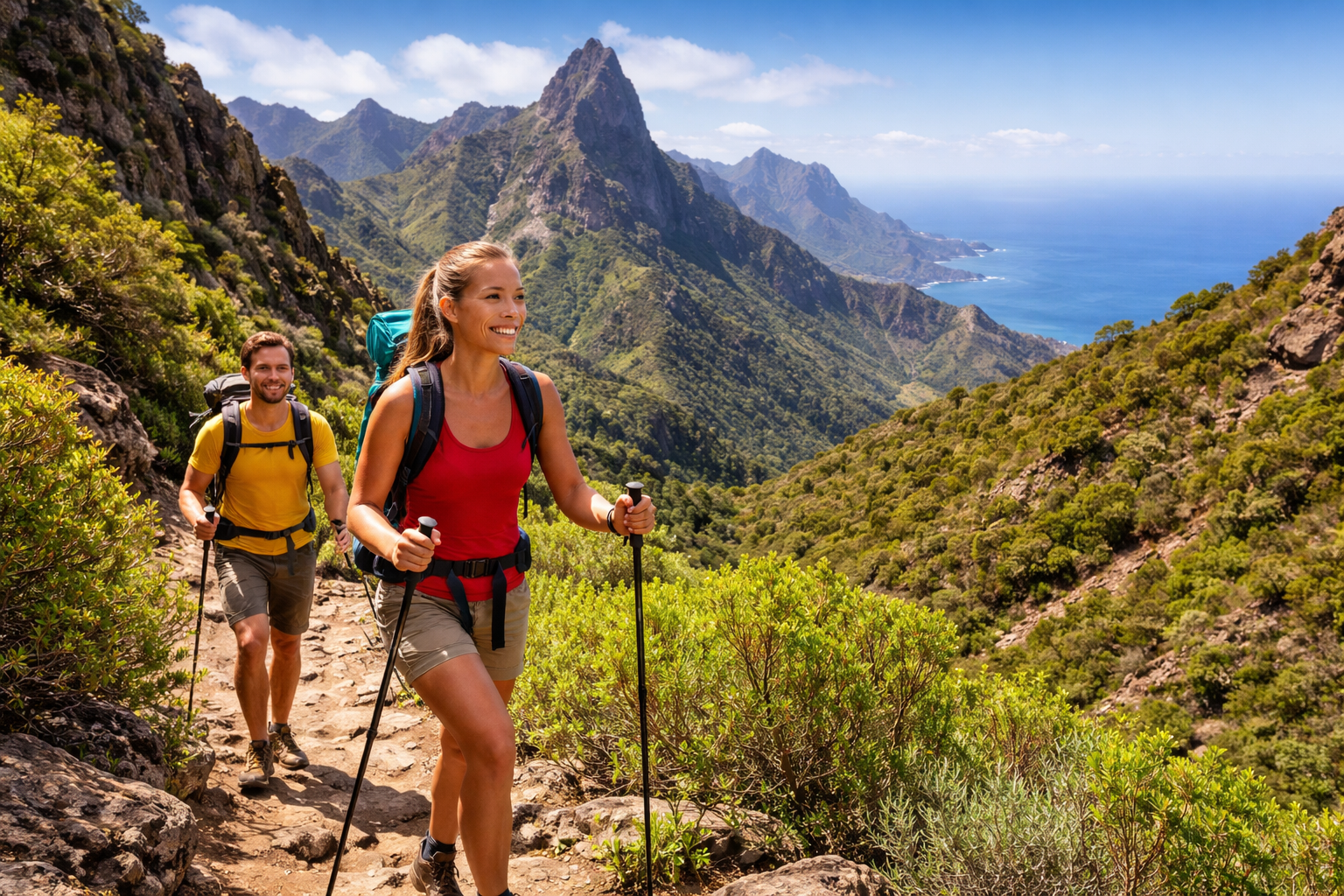
Choosing the best Canary Island for hiking is not about finding one island that wins for everyone. It is about matching the island to the kind of walking holiday you actually want. Some travellers are looking for dramatic volcanic terrain, big elevation changes and routes that feel like proper mountain adventures. Others want scenic but manageable trails, easier road access, village stops and a comfortable hotel base. Some are planning a hiking-first trip. Others want to combine walking with beaches, restaurants, viewpoints and a more relaxed holiday pace.
That is exactly why the Canary Islands are both exciting and confusing for hikers. The islands are close enough to compare, but very different in how they deliver active travel. La Palma is not the same kind of hiking island as La Gomera. Tenerife offers a very different experience from Gran Canaria. Lanzarote and Fuerteventura can still work for active travellers, but they fit a lighter walking profile than a true hiking-first holiday.
There is also a commercial reality behind the question. Hiking travel is not only about trails. It is about where to stay, whether you need a car, how much driving is realistic, whether your partner also wants non-hiking days, and how comfortable you want the holiday to feel outside the walking itself. That means the right island is the one that supports the whole trip, not just the best single route.
This guide compares the Canary Islands from that wider perspective. It is built to help you choose the best island for your hiking style, your accommodation expectations and your overall holiday goals.
Quick Answer: Which Canary Island Is Best for Hiking?
If hiking is the main purpose of the trip, La Palma is one of the strongest overall choices. It combines serious scenery, altitude, volcanic landscapes and a travel rhythm that suits walkers. La Gomera is another outstanding option, especially if you want greener scenery, a quieter atmosphere and a more immersive walking holiday. Tenerife is the best choice if you want major volcanic drama and the flexibility to combine hiking with a bigger overall holiday. Gran Canaria is one of the best balanced options for mixed hiking and comfort. Lanzarote works better for lighter scenic walking, while Fuerteventura is more suitable for active travellers who want some walking within a beach-led trip.
| Island | Best for | Hiking style | Overall hiking strength |
|---|---|---|---|
| La Palma | Dedicated hikers and nature-led trips | Volcanic, forest, ridge, altitude | Excellent |
| La Gomera | Quiet walking holidays and green scenery | Forest, ravines, viewpoints, traditional trails | Excellent |
| Tenerife | Volcanic drama plus holiday flexibility | High-altitude, lava, mountain, coastal variety | Very strong |
| Gran Canaria | Balanced hiking and comfort | Barrancos, interior mountains, village routes | Very strong |
| Lanzarote | Light scenic walking | Volcanic terrain, coastal walks | Moderate |
| Fuerteventura | Beach-led active trips | Dry trails, coast, ridges, lighter walking | Moderate to limited |
Best Island for Serious Hiking: La Palma
If the whole trip is built around walking rather than simply including a few scenic routes, La Palma is one of the best places to start. The island has the kind of terrain that gives hiking real substance. You get elevation, strong visual reward, varied vegetation and routes that feel like genuine mountain experiences rather than casual holiday walks. It is one of the best choices for travellers who want the trip to revolve around landscapes first and hotel convenience second.
One of the island’s key strengths is variety. La Palma is not a one-note hiking destination. The island can move from forest atmosphere to volcanic sections, panoramic ridges and exposed scenic viewpoints within a single holiday. That makes it extremely rewarding for longer stays and repeat walking days. It also supports a more premium travel profile than some people expect. Scenic apartments, boutique stays and quieter villas all fit the product well.
The trade-off is that logistics matter. La Palma works best when the accommodation base and route plan are chosen carefully. It is not the strongest island for travellers who want to improvise everything after arrival. It performs far better when the trip is structured around route style, driving comfort and the right part of the island.
Best Island for Quiet, Immersive Walking: La Gomera
La Gomera is one of the best hiking islands in the whole archipelago for travellers who want peace, greenery and a lower-tourism environment. The island feels calmer, more traditional and more rooted in its landscapes than the larger mainstream islands. That makes it especially attractive to walkers who care about atmosphere, not only route quality.
Its biggest strength is immersion. Hiking here feels connected to forest, ravines, villages and old island paths rather than just to headline landmarks. This is not the island for maximum volcanic spectacle in the Teide sense. It is the island for depth, texture and a quieter style of discovery. That makes it especially attractive to couples, mature travellers and repeat Canary Islands visitors who want a more personal walking holiday.
Commercially, La Gomera works very well for clients who are comfortable with a slightly more involved arrival in exchange for a stronger, calmer destination. It also fits nature-focused accommodation much better than a classic resort model.
Best Island for Volcanic Drama and Flexibility: Tenerife
Tenerife is the strongest hiking island for travellers who do not want to choose between serious landscapes and broader holiday infrastructure. It gives you large-scale volcanic scenery, strong mountain contrasts and a wide range of walking environments, while still offering the broadest accommodation choice and easiest mixed-holiday structure.
That is what makes it such a strong commercial option. On Tenerife, one traveller can focus on hiking while another still gets beaches, dining, excursions or city time. Families and couples with mixed priorities often find this much easier than booking a more niche walking island. It is also one of the best options for first-time visitors who want to test whether they prefer a pure hiking holiday or a more flexible island trip.
The only caution is scale. Tenerife can feel fragmented if the base is chosen badly. A south-coast resort hotel is not always the smartest choice for a trip that is supposed to be hiking-led. The island works best when the base supports the route plan.
Best Balanced Option for Hiking and Comfort: Gran Canaria
Gran Canaria is one of the most underrated hiking islands in the Canaries. Many travellers associate it mostly with southern resorts, but the interior offers mountain routes, ravines, village-based walking and scenic road access that make it a very strong all-round active destination.
The biggest advantage here is balance. Gran Canaria works well for travellers who want proper walking without giving up comfort, easier road logistics or the option of some classic holiday downtime. It is particularly attractive for couples, active families and travellers who want to stay somewhere comfortable and then drive into the interior for selected route days.
It may not feel as purist as La Palma or as quietly atmospheric as La Gomera, but it solves a wider range of traveller needs. That makes it one of the safest choices for a mixed hiking holiday.
Best for Light Scenic Walking: Lanzarote
Lanzarote is one of the most visually distinctive islands in the Canaries, but it is usually better for scenic walking than for a dedicated hiking-first trip. The appeal comes from volcanic atmosphere, open views, coastal routes and lava landscapes rather than deep mountain-route culture.
This makes Lanzarote very attractive for travellers who want active days within a broader holiday built around beaches, photography, design-led accommodation and scenic driving. It suits couples especially well. If you want to move every day but do not need demanding hiking, it can be an excellent choice.
For a serious walking holiday, though, it is rarely the strongest answer. It is better sold as an island for beautiful scenic movement rather than hardcore hiking.
Best for Walking Within a Beach Holiday: Fuerteventura
Fuerteventura is not usually the first recommendation for a hiking-first holiday, but it still has value for the right traveller. If you enjoy dry scenery, coastal openness and lighter active days rather than deep trail culture, it can work very well.
The island is most attractive when walking is part of a beach-led or surf-led holiday rather than the whole purpose of the trip. That distinction matters. You do not choose Fuerteventura for the same reasons you choose La Palma. You choose it if you want space, sea, scenery and some walking, not route intensity.
Best Island by Hiker Type
| Traveller type | Best island | Why |
|---|---|---|
| Serious hiking-first traveller | La Palma | Best overall route depth and terrain identity |
| Quiet nature-loving couple | La Gomera | Immersive scenery and low tourism pressure |
| Volcanic landscape lover | Tenerife | Big volcanic drama with broad variety |
| Mixed hiking and comfort holiday | Gran Canaria | Strong balance between routes and easy travel |
| Scenic walking with style and beaches | Lanzarote | Great visual atmosphere and lighter active travel |
| Beach holiday with some walking | Fuerteventura | Best when hiking is secondary |
Best Island by Season
| Season | Best island | Why it works |
|---|---|---|
| Winter | La Palma, La Gomera, Tenerife | Strong scenic walking with mild weather and good active-travel conditions |
| Spring | Gran Canaria, La Palma | Excellent balance of route variety and comfortable travel pace |
| Autumn | Tenerife, Gran Canaria | Very strong for mixed hiking and wider holiday flexibility |
| Year-round light walking | Lanzarote, Fuerteventura | Best when scenic activity matters more than demanding trail depth |
Best Island by Logistics
| Travel style | Best island | Why |
|---|---|---|
| Easiest big-island logistics | Tenerife | Broadest accommodation choice and easiest mixed-holiday structure |
| Most rewarding planned hiking trip | La Palma | High payoff when route planning and base choice are done properly |
| Quiet destination with more intentional planning | La Gomera | Excellent for travellers happy to trade convenience for atmosphere |
| Best compromise between hiking and ease | Gran Canaria | Strong routes with simpler overall holiday organisation |
How to Avoid Booking the Wrong Hiking Island
The biggest mistake is choosing an island based on one famous route rather than on the total holiday. A spectacular hike does not automatically mean the island is right for your partner’s interests, your accommodation expectations or your realistic energy levels. Another common mistake is overestimating how much hard hiking you actually want. Many travellers imagine a fully active trip, then discover that they would have preferred two or three excellent route days within a more relaxed island holiday.
The smartest approach is to choose the island that fits the whole profile of the trip. If you want hiking to dominate the holiday, start with La Palma or La Gomera. If you want walking plus wider flexibility, choose Tenerife or Gran Canaria. If your real priority is scenic activity rather than serious hiking, Lanzarote may be enough. If beach quality still matters most, Fuerteventura becomes more relevant.
Final Recommendation
If hiking is the central reason for travel, La Palma remains one of the strongest overall answers. If you want greener immersion and a quieter walking holiday, La Gomera is exceptional. If you want major volcanic landscapes with bigger-holiday flexibility, choose Tenerife. If you want the easiest all-round balance between hiking and comfort, Gran Canaria is one of the smartest choices.
Need help choosing the right island, accommodation base and transfer setup for a hiking holiday? Fly To Canarias can help you compare the islands not only by route style, but by arrival logistics, holiday pace and the kind of stay that will make the walking trip feel right from the first day.
Ready for the next step?
Explore more destinations or contact us before you book if you want a clearer recommendation.